They lived on Vysokaya Street
We met Yulia Tkachenko on the social networking site after she shared a few photos from her family archive with users. And then we met in her office. Yulia Mykolayivna works as a psychologist and could tell us a lot of interesting and professional things from her many years of experience in her profession.
We immersed ourselves in looking through her home photo archive, which revealed the life of her parents' family, grandparents, and great-grandparents.
Today, it is difficult to find a family in Rivne that has so many old black-and-white photographs.The war, frequent changes of housing, and, most importantly, the family's forced deportation to Austria for forced labor during World War II all seemed to prevent them from preserving their belongings. But not the photos!

Hanna Serha-Shevchuk. Rivne, 1930s.
Both my grandmother and mother were deeply interested in preserving family photos. They had albums, and on all holidays they would sit down at the table and look at the photos, plunging into memories
- Ms. Yulia answers my mute question.
The memories I heard from my new friend are the first story about those who lived on the small Vysoka Street.
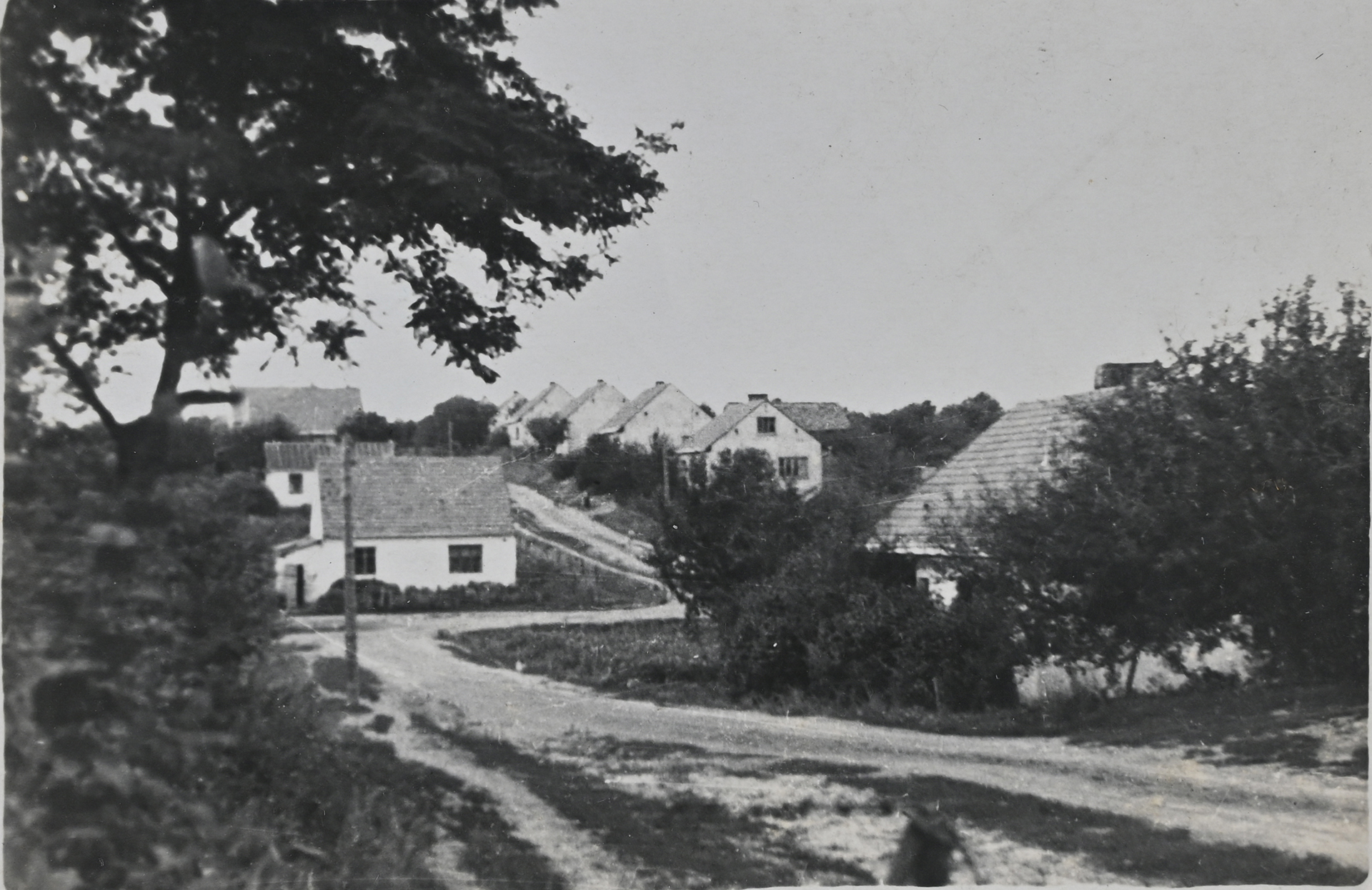
This street was located on a steep slope of the historic "Caucasus" and ran uphill parallel to Mickiewicz Street.
Today, having retained its historical name, the street has only a few private houses surrounded by high-rise buildings built in the 1970s with the address Mickiewicza Street.

Olena and Marusya Serhii at a masquerade. Rivne, 1930s.
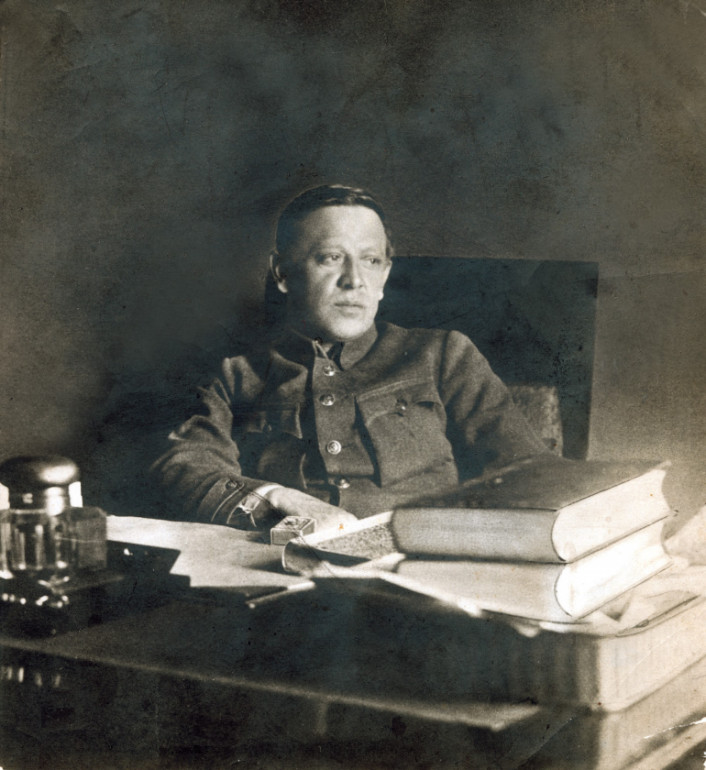
On her mother's side, Ms. Yulia is from the Shevchuks, who lived in Rivne before the Second World War. Her grandfather, Nazar Shevchuk, was originally from Galicia.
He was an educated man, knew several languages, including Polish and German. In Rivne, under Polish rule, he worked as the head of the local cooperative Spoldzielnia rajonova.
He was a widower with a teenage daughter, Lyudmyla. Nazar Maksymovych was in his forties when he married for the second time to Hanna (Serhia's maiden name), who was 15 years younger than him.
In her younger years, Hanna Serha was a member of Plast, participated in various activities of Ukrainian youth, and enjoyed wearing Ukrainian folk costumes.
At the time they met, Hanna Serha had completed a cooperative course and was working as a saleswoman in Rivne. It was a rather late marriage for both of them, and in 1940 their daughter Natalia, my narrator's future mother, was born.

After their marriage, Nazar and Hanna Shevchuk first lived on Hrabnyk Street, renting a decent house, and after the war they settled on a small street called Vysoka, which was located in the "Caucasus." Hanna's two sisters, Tetiana and Lidiia, lived in the same house with them.

Hanna, left, with her sister Lidiia. Rivne, 1930s.
Serha is the surname of a family whose ancestors originated from Poltava region. Hanna's father, Kindrat Serha, was a Polish border guard and later worked as an official in a notary's office. He died in 1922 at the age of 44 and was buried in Rivne at the Hrabnyk Cemetery.
Her mother, Lizaveta Ivanivna, was a good dressmaker. Five sisters of this family lived in Rivne with their parents. Throughout their lives, the sisters were very friendly with each other, worried about each other's problems, supported each other, and always helped.


Hanna and Nazar Shevchuk. Rivne, 1930s.
In the interwar period of life in Rivne, the Shevchuk family and the grandmother's sisters had a rather intelligent social circle: doctors, musicians, and women who had graduated from the Institute of Noble Maidens.
The youngest of the sisters, Tetiana Serha, was an excellent seamstress. Her services were used by neighbors and quite wealthy citizens.
Maria Sierga was married to a Pole, Leopold Nowosad, who was a singer at the Warsaw Opera after the war. They lived in Warsaw. Maria was also a very talented woman; she even wrote a libretto. The Novosad family was childless, and their genealogy in Poland ended.


Olena and Genek Rudnytsky. Rivne, 1930s.
Olena Serha was the brightest among the sisters.
She was beautiful, had an excellent memory, loved to recite poetry, and sang.
When it came time for her to get an education, all the sisters decided that she should study at a gymnasium and pooled their financial resources to send her there. But Olena's personal life was tragic.
She married a Pole, Genek Rudnytskyi. In 1941, they had a son, Andrii. Genek was killed by the Germans on the same Vysoka Street, for no reason at all.
They say that Rudnytsky was shot by accident, mistaken for another person.
According to Hanna Shevchuk's recollections, many Jews lived in the area of Vysoka Street, and the occupiers organized raids there.
Lidia Serha lived in the same house as Tetiana and Hanna's family.
During the Nazi occupation, she was associated with partisans, but the details of her participation in the partisan movement are unknown.
It was she who stayed in Rivne when the family was taken to forced labor in Austria and preserved the family photo archive.


Photo:
Sister Serga
Hanna Shevchuk with her husband's daughter Lyudmyla and an unidentified girl. Rivne, 1930s.
Kindrat Serha. Rivne, 1930s.
Lidia Serha. Rivne, 1930s.
Natalia Serha with the girls. Rivne, 1930s.
Maria Serha with her husband Leopold Novosad. Rivne, 1930s.
Leopold Novosad and Hanna Serha. Rivne, 1930s.
Maria Serha with her husband Leopold and friends. Rivne, 1930s.
"Our family was devout and there was not a single religious holiday that we did not celebrate. My grandmother always went to church. She knew well the priest and healer Mykhailo Nosal, who was the rector of the Holy Dormition Church. Church was sacred to the family," Yulia recalls.
In 1944, the family was affected by the fate of the Ostarbeiters.
"Unfortunately, I do not know the details of the rather complicated life of the older generation. In 1944, my family was deported by the Germans as Ostarbeiters to Austria.
My grandfather's family, my grandmother's sisters Olena and Tetiana, and two young children - my mother and Andriy, Olena's son - were taken away. When they were loaded into the wagons that were to leave Lviv region for Germany, my grandmother gave gold coins to a German guard to drop them off in Austria.
They knew that many of the Ukrainians deported to Germany did not return and died there. In Austria, people were more merciful to Ostarbeiters. There was hope that they would find a place to live somewhere in the countryside, but they ended up in a camp in Stockerau.
My grandmother and her two children lived in a barracks, taking care of the children and not working. Her sisters Olena and Tetiana Serhi worked at a factory that made parts for airplanes. My grandfather Nazar, who spoke German well, was taken by an Austrian family that had a sausage shop, and he worked there. Everyone lived separately.
Grandma Tanya took a foot-operated sewing machine with her on that long journey. This small, hunched woman, who had a damaged spine since childhood, sewed all her life and the machine was always with her. Even there, in Austria, she continued to sew. We still keep this machine as a particularly precious family heirloom.
My relatives were liberated by the Americans in 1945 and had the opportunity to stay in Austria or go to America. The Austrians, for whom my grandfather worked, respected him very much and persuaded him to stay. However, my grandmother was categorical, saying that she was Ukrainian and had to go home.
That's when the Shevchuk family and grandmother's sisters returned to Rivne. They all settled together in a house on Vysoka Street, where they lived until 1973, when theirs and the neighboring houses were demolished for the construction of high-rise buildings.


In the photo
Natalka Shevchuk with her cousin Andriy. 1940s.
Tetiana Serha with her sister Hanna's grandchildren
After his return, Nazar's grandfather was summoned to the NKVD office on Pushkin Street every time he returned, constantly being asked one question: why he returned to Rivne, whether he had been recruited by foreign powers, whether he was not an "enemy of the people"?
These interrogations cost him his health and life. My grandfather had a weak heart, and one day he returned from those interrogations and collapsed and died right on the doorstep. It was 1947. Nazar Shevchuk was buried at the Hrabnyk cemetery. A 47-year-old grandmother remained with her only 7-year-old daughter Natalia, my mother. She was a housewife, and then she went to work as a nanny in a kindergarten."
During the war, Nazar Shevchuk's eldest daughter from his first marriage, Liudmyla, together with her father and Hanna, who replaced her mother, was also held in an Ostarbeiter camp in the Austrian city of Stockerau. In 1945, the 18-year-old beauty Liudmyla met a Frenchman who participated in the liberation of workers from the east. The couple gets married and Lyudmyla leaves for France.
For some time, the family kept in close touch with her, exchanging frequent correspondence and photos, but the Soviet authorities quickly stopped this communication. They summoned her foster mother, Anna, to the authorities' offices and forced her to write a disclaimer of their family ties.
Three sisters from Serha's family lived together in one house on Vysoka Street, taking care of each other. The women never sat idle. Tetiana Serha was especially creative, and in addition to sewing clothes, she turned any trinket into an aesthetic item.
Hanna Shevchuk outlived her husband by 44 years and died in 1991, having lived in this world for 97 years.
"Ukrainian has always been the language in our family, and our festive outfits are embroidered shirts. Until the end of her life, my grandmother Hanna was a supporter of Ukraine, a member of the Union of Ukrainian Women, which was revived in independent Ukraine."

Yulia Tkachenko. Rivne, 2024.
It is heartwarming to look at old photographs.
From them, the bright and happy eyes of beautiful women and elegant men look at us as they walk carefree along the main street of old Rivne.
The shops are filled with a variety of goods, and behind the counter is a polite saleswoman, Hanna Serha.
The beautiful Hanna in an embroidered shirt and masquerade costume. A family at a festive table with one bottle of wine for everyone.
They do not know that they will face a time of loss, tears, separation, forced labor, and unjustified persecution.
But hope will come again...
Halyna Danylchuk